EVALUATE EARLY-SEASON CORN CONDITIONS FOR BETTER YIELD OUTCOMES
Key points:
• Checking vigor early in the season can help corn to a stronger finish.
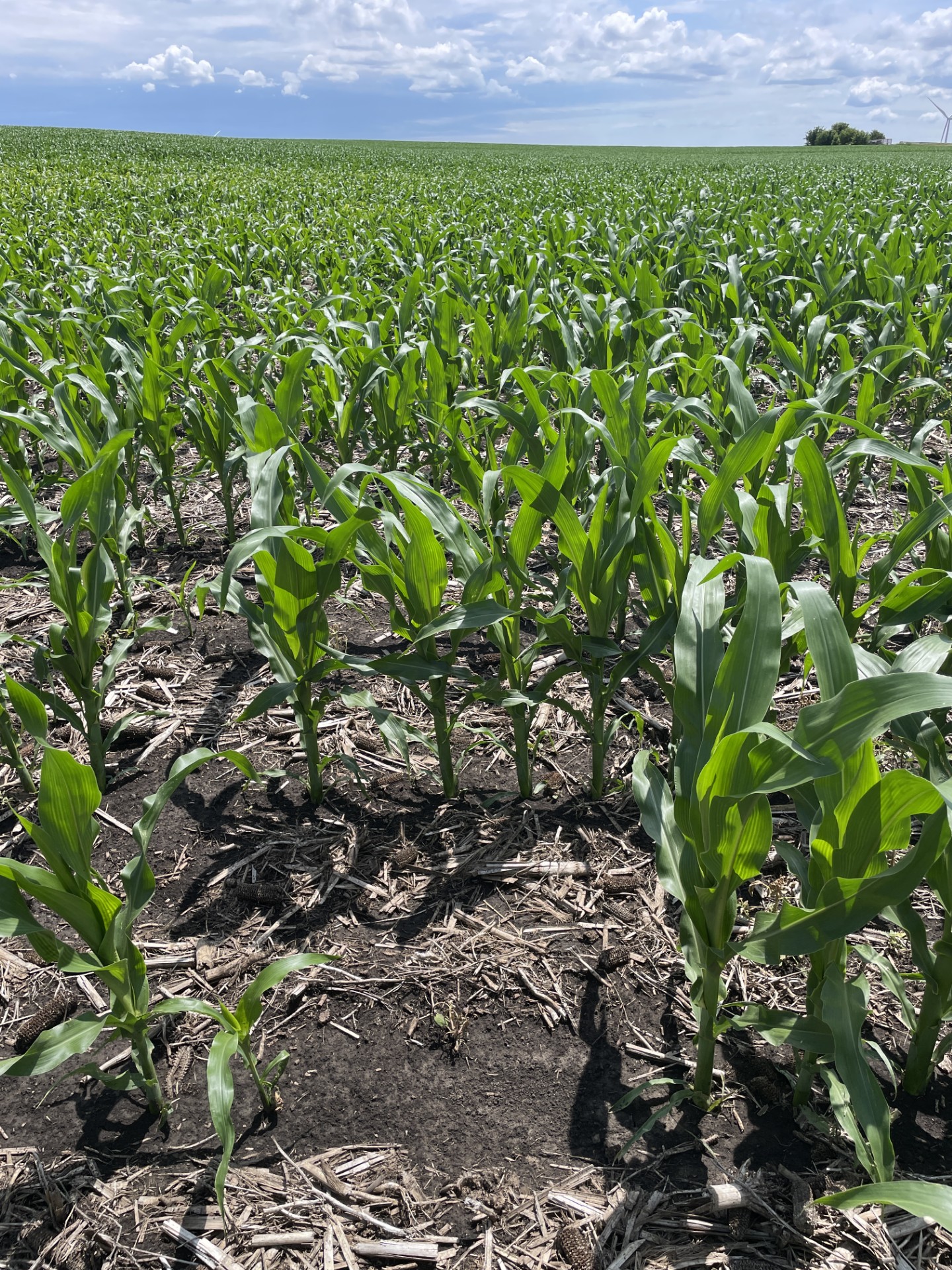
• Even emergence, plant health and dark green leaves are positive signs.
• Digging roots can help farmers spot yield threats early.
Evaluating corn vigor soon after emergence can help identify early-season issues and support a stronger finish at harvest.
“The V4 to V6 stage is when we determine the number of kernel rows around the ear,” says Jeff Morey, AgriGold field agronomist. “If we have any stress during that time, corn genetics that normally would have 16 kernel rows around could possibly drop to 14 rows around, impacting yield.”
Defining good corn vigor
Even emergence is the primary indicator of good corn vigor. Morey says corn plants separated by more than one leaf stage can indicate future yield loss.
“Let’s say, for example, 90% of my plants are at V4 and the other 10% are V2,” says Morey. “That 10% has likely given up some yield.”
Plant health and dark green leaves are other signs of good corn vigor. Yellowing may indicate a nitrogen deficiency, while purpling could point to a phosphorus shortage. “Discolored or stressed plants can signal a yield hit,” says Morey. “That said, it’s important to keep in mind that hybrids naturally vary in color.”
To get a complete picture of crop vigor, Morey recommends digging plants to inspect root development. Morey says, “If you dig that root early, you may be able to see things like herbicide damage or disease infections.”
Scouting for weather-related concerns
Both wet and dry conditions can lead to uneven emergence, but the specific issues you scout for will depend on the weather you’re experiencing.
In a cool, wet spring, farmers should watch out for poor root development or damping off. “The root development may be limited because of saturated soils depleting the oxygen, which is essential for root respiration and nutrient uptake,” says Morey. “If you encounter drought stress later on, this could be a problem because you’ll have a mass of roots near the soil surface where it dries out first.”
Dry conditions create the opposite challenge by reducing nutrient availability in the soil. “If nutrients aren’t there in a soil solution for the plant to take up, it will struggle from the get-go — and we don't want that stress in front of the V4 to V6 timeframe,” says Morey.
“On the positive side, if you get just enough water and have some dryness, roots will dive deeper, forming a root mass that’s able to access water and nutrients later in the season because they're deeper in the soil,” says Morey.
Farmers should also scout for signs of early-season diseases and insect pressure from cutworm, seed corn maggot and white grub.
When to take action
When deciding which issues to address, Morey says farmers need to determine what percent of the field is being impacted and whether the issue justifies intervention. Walk your fields, dig some roots, put your pencil to the paper and reach out to your local AgriGold field agronomist for additional support.
For support making the most of every acre — from seed selection to in-season decisions like improving corn vigor — reach out to your local AgriGold agronomist.


